

Menu Optimisation: How to make every SKU work harder this winter

Updated: May 4
With margin pressure still front of mind across hospitality, every item on your menu needs to earn its place.
Labour is tight. Food costs remain volatile. And carrying unnecessary stock can quietly eat into profits.
That’s where smarter SKU management comes in.
By focusing on cross-utilisation and building menus around hardworking ingredients, operators can reduce waste, simplify kitchens, and improve margins — without compromising creativity.
Why SKU efficiency matters
Every additional product in your kitchen carries hidden costs:
Ordering and admin time
Prep complexity
Increased risk of waste
Slower service during peak
Even small reductions in SKU count can have a big impact.
In fact, reducing unnecessary items and focusing on multi-use ingredients can:
Improve gross profit
Reduce waste
Streamline prep and service
This isn’t about limiting your menu — it’s about making it work smarter.
The power of cross-utilisation
Cross-utilisation means using the same ingredient across multiple dishes, formats, and dayparts.
Done well, it allows you to:
Build a more flexible menu
Reduce stockholding
Maintain consistency across dishes
Increase yield from every product
A single ingredient can move across:
Small plates
Mains
Sides
Specials
Creating more menu options without increasing complexity.
Build your menu around hero ingredients
High-performing kitchens focus on ingredients that deliver across multiple applications.

Proteins that go further
Choose cuts that are versatile and forgiving:
Slow-cooked beef → tacos, pies, ragù, soups
Pork shoulder → burgers, pasta, share plates
Chicken thighs → multiple cuisines and formats
These ingredients provide flexibility while maintaining consistency.

Seasonal vegetables with range
Designing menus around seasonal produce creates natural versatility.
One ingredient can become:
A soup
A purée
A warm salad
A filling or topping
This allows menus to evolve without constantly adding new SKUs.
Sauces that do more
A well-built base sauce can underpin multiple dishes.
For example:
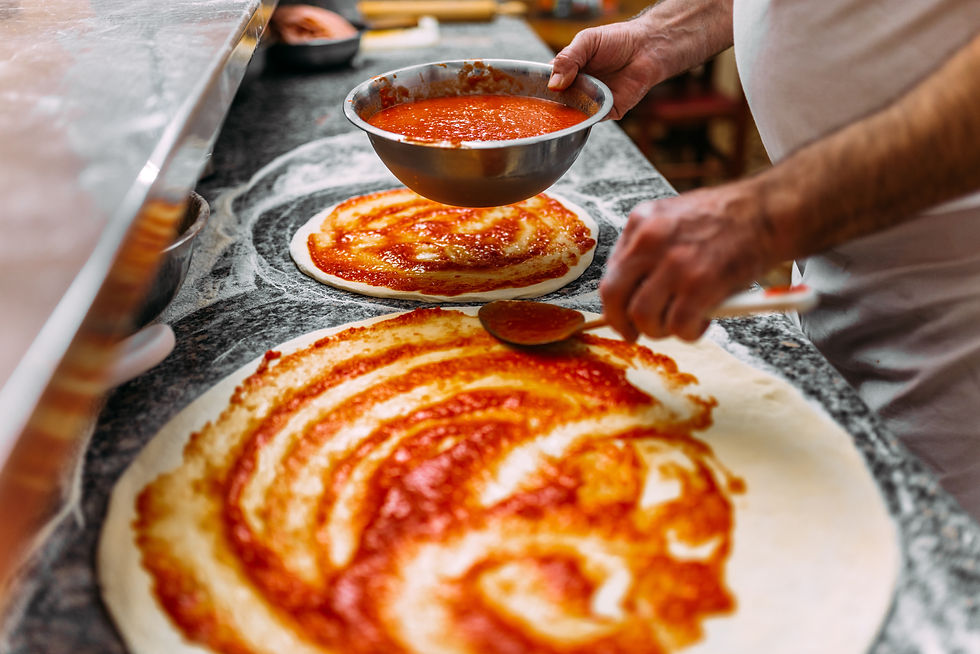
Tomato base → pasta, pizza, braises, dips
Yoghurt base → brunch, salads, mains, sides
Same base, different applications — less prep, more efficiency.
Reduce waste, increase margin
One of the biggest opportunities lies in whole ingredient usage.
By using more of each product, you can:
Reduce waste
Maximise yield
Unlock new menu ideas
Examples:
Vegetable offcuts → fritters, stocks, garnishes
Herb stems → oils, sauces, infusions
Citrus peel → syrups, salts, drinks


This approach turns waste reduction into a profit strategy.
A simple SKU audit to get started
If you’re not sure where to begin, start here:
List every active SKU
Identify single-use ingredients
Highlight low-margin dishes
Look for flavour overlaps
Rebuild around multi-use components
If an ingredient only appears once — and isn’t a hero — it’s worth questioning its place.
The bottom line: fewer SKUs, stronger margins
Smarter menus aren’t about doing less — they’re about doing more with what you already have.
By focusing on cross-utilisation and high-performing ingredients, operators can:
Simplify kitchen operations
Reduce waste and stockholding
Improve consistency
Strengthen profitability
In today’s environment, the most successful kitchens aren’t the biggest — they’re the smartest.
Looking to streamline your menu and improve margins this winter?
Talk to your local Bidfood rep about products that deliver cross-utilisation and help your kitchen run more efficiently.


The best thing about Scrandle https://scrandle.cc/ is that every comparison gives you something to think about. A dish that looks better is not always the one with the stronger crowd rating.